
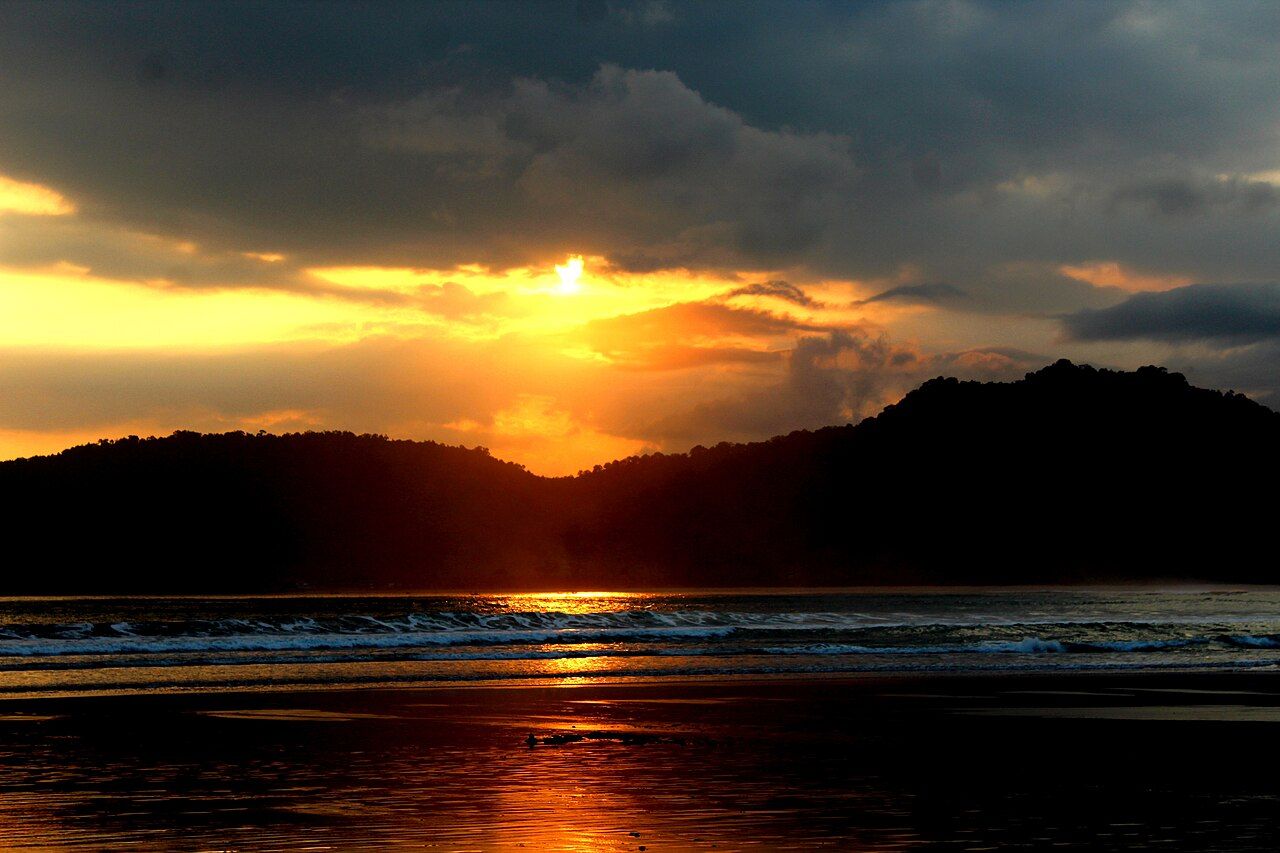
Pulau Merah, the Red Island, is a small, steep, forested hill standing in the surf just off a broad beach on the south coast of Banyuwangi regency. It takes its name from the reddish soil that shows through its green cover. The beach in front of it has become one of the best-known stretches of coast in the area, popular with local families at weekends, with surfers learning on its gentle waves and with anyone who wants to watch the sun go down over the Indian Ocean.
The island and the beach
The hill is close enough to shore that at low tide you can wade out towards its base across the sand and shallow water. At high tide the sea cuts it off. Its slopes are steep and covered in thick vegetation, and the reddish rock shows on the cliffs around its edges. From the sea, its seaward side reveals caves and rocky inlets that cannot be seen from the beach.
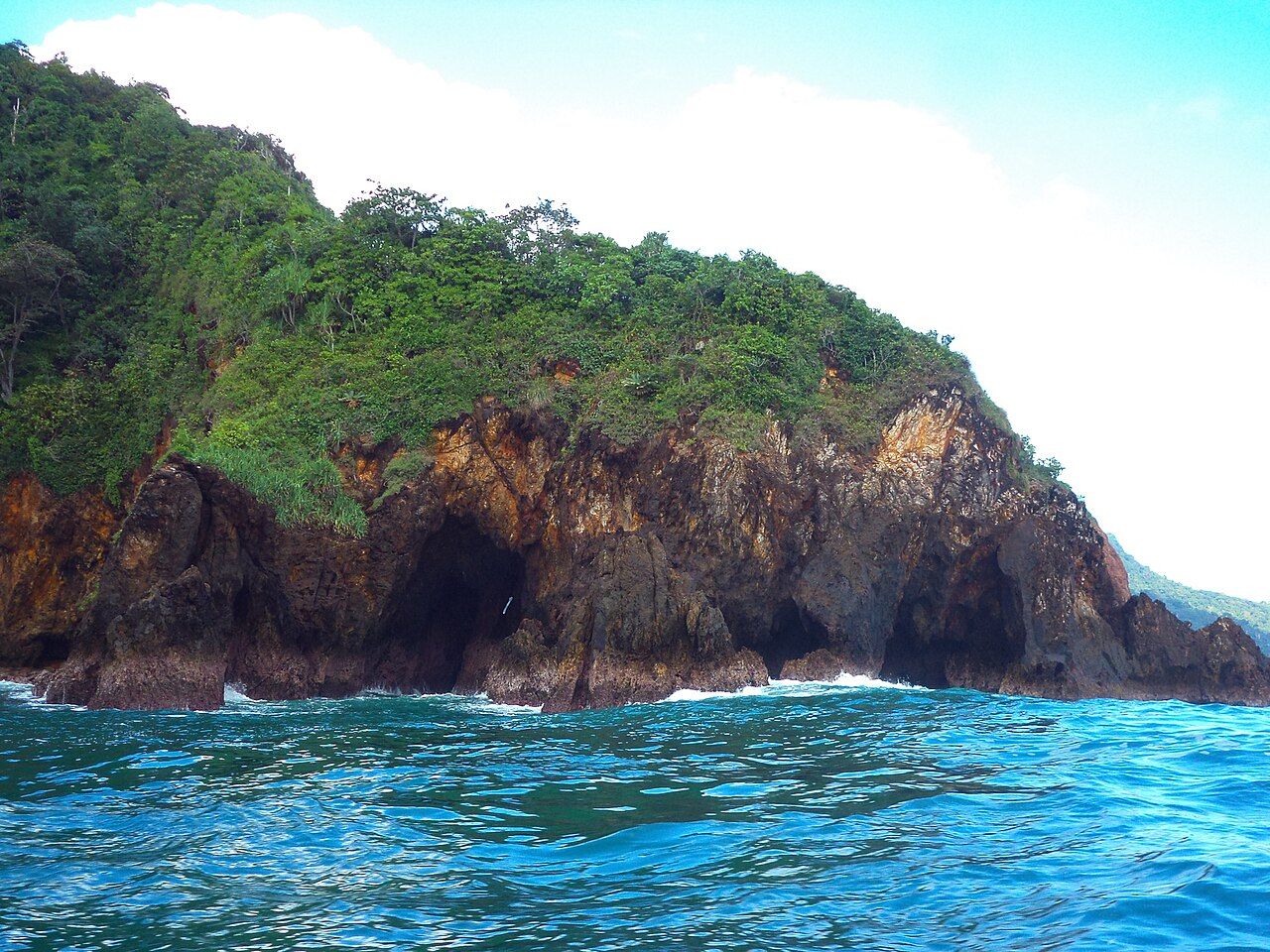
The beach itself is a wide curve of sand, with low headlands on either side and wooded hills behind. Its relatively gentle waves have made it a popular place for beginner surfing, and you will often see surfboards for rent on the beach. Facilities include simple stalls and places to sit; they have grown as the beach has become better known.
Sunset over the bay
Pulau Merah faces roughly southwest, which makes it one of the better places on this coast to watch the sunset. In the late afternoon the light softens, the sea turns gold, and the hill becomes a dark silhouette against the sky. On clear evenings the colours can be spectacular.
Late afternoon is also when the beach is at its busiest, particularly on weekends and holidays, when families come from Banyuwangi and the surrounding towns. For a quieter visit, go on a weekday.
Fishing boats work this stretch of coast, and in the morning you may see them coming in or pulled up on the sand at the ends of the beach. Mornings are generally calmer and cooler than afternoons, with softer light on the hill and fewer people about, so an early visit has its own appeal even if the sunset is the main event.
Swimming with caution
This is a south-coast beach facing the open Indian Ocean, and the sea needs respect. Waves can be bigger than they look, and rip currents can form along the beach, especially around the headlands and channels. There may be lifeguards or warning flags at times, but do not count on them.
On the same journeyAlas Purwo and the surf at Plengkung- Swim only in calm conditions and near other people.
- Stay out of the water if the waves are big or the sea looks rough.
- Watch for rip currents: if you are caught in one, swim parallel to the shore until you are out of it, then head back in.
- Keep a close eye on children at all times.
- Check the tide before wading out towards the hill, and come back before the water rises.
Local beliefs about the south coast are strong. Many people in Java regard the southern sea with particular respect, and you may hear warnings about it. Whatever you believe, the practical warnings are sound.
A coast that has rebuilt
This coast has known disaster. In the 1990s a tsunami struck the south coast of East Java, causing heavy loss of life and destruction in the villages around this part of Banyuwangi. Communities rebuilt in the years that followed, and the growth of the beach as a place for visitors came later. Today you may see tsunami warning signs and evacuation routes along the coast, a reminder that this is an active stretch of ocean.
Take a moment to note the evacuation routes when you arrive. If you ever feel a strong earthquake while on the coast, move to higher ground immediately, without waiting for an official warning.
Two hours south past Pesanggaran
Pulau Merah lies in the south of Banyuwangi regency, beyond Pesanggaran, and the drive from Banyuwangi town takes around two hours depending on traffic and road conditions. The road passes through farmland, villages and plantations. There may be a small fee to enter the beach area and to park; amounts change, so carry cash.
From the beach, other parts of the south coast are within reach. Alas Purwo and its forests lie farther east, while Meru Betiri, with its nesting turtles, is farther west. Both are wilder and harder to reach, but rewarding.
Hot sand at Pulau Merah
- Bring strong sunscreen, a hat and water; the sun on the beach is intense.
- Wear sandals for the walk across hot sand and rocky sections.
- Carry cash for parking, entry and food stalls.
- Keep your belongings with you or with someone you trust.
- Dress modestly away from the beach itself, in villages and at roadside stalls.
Combining the beach with Ijen
Red Island fits well into a trip built around Kawah Ijen. After a night on the crater, many visitors spend a day or two on the coast. The south-coast beaches offer a complete contrast to the plateau: warmth instead of cold, open sea instead of sulphur smoke. Combined with a visit to Banyuwangi itself, they make a fuller picture of the eastern tip of Java.
Arrive in the afternoon, wade out towards the hill at low tide if conditions allow, and stay for the sunset. It is a simple pleasure, and a good way to end a few days of early starts.
Back to the crater rim for the next walk.
Photographers on the rim
- Silmi Assyarifah, CC BY-SA 4.0
- Farah Salsabila, CC BY-SA 4.0