
A forest that runs down to the sea
Meru Betiri National Park covers a block of steep, wet hills on Java's south coast, straddling the line between the Banyuwangi and Jember regencies. Where the plateau country around Ijen is open and cool, this is closed canopy: lowland and hill rainforest, strangler figs, rattan, bamboo along the rivers, and a coastline of small bays cut between rocky headlands. Few roads enter the park and none of them is smooth, which goes a long way to explaining why the forest is still standing.
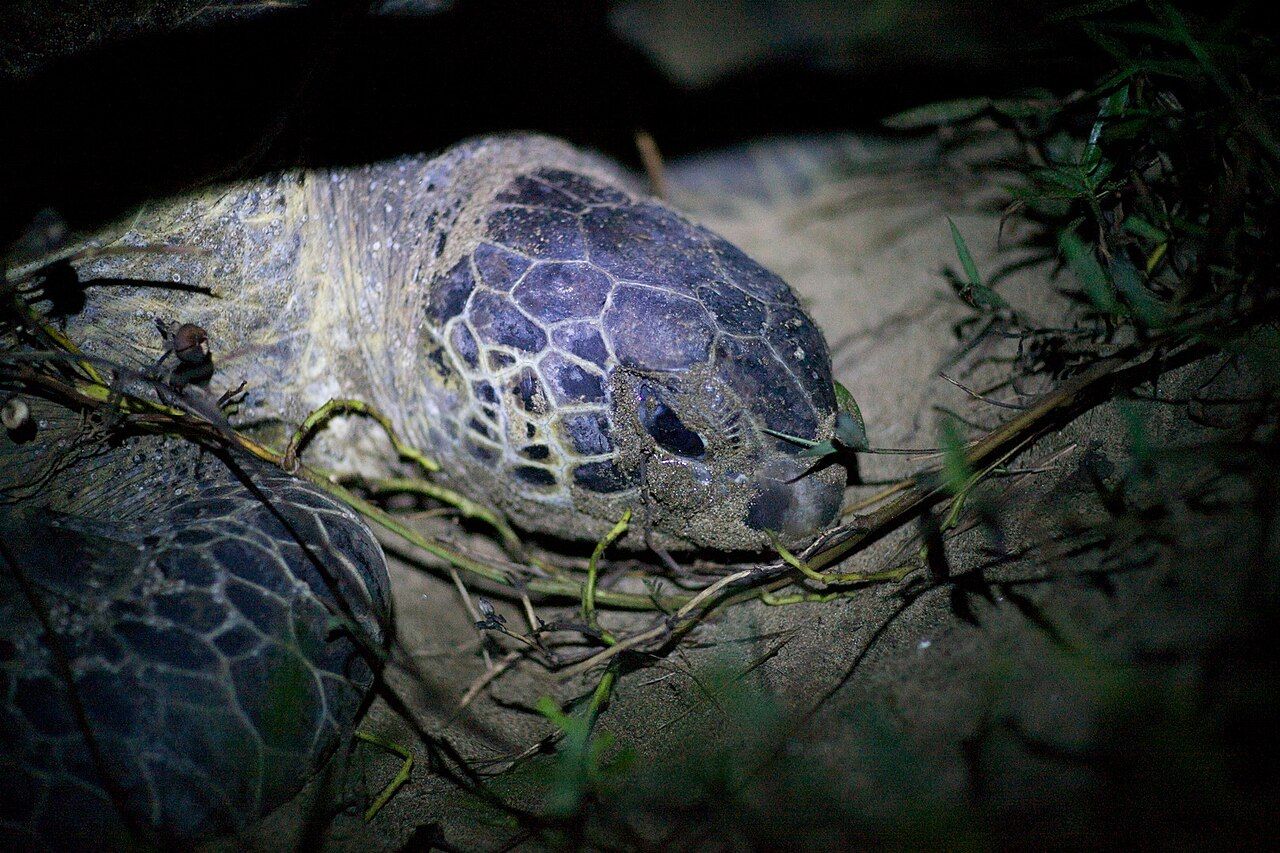
Most people make the trip for one reason, the beach at Sukamade, where sea turtles drag themselves up the sand after dark to lay their eggs. The forest rewards patience as well. Leaf monkeys, long-tailed macaques, hornbills and monitor lizards are the animals you are most likely to notice, and the park is one of the few places in Java where a parasitic flower of the Rafflesia family has been recorded. Seeing any of them comes down to luck, time and keeping quiet.
The road in
Reaching Sukamade is the real test of the trip. The usual approach runs from the south of Banyuwangi regency through Pesanggaran and the plantation village of Sarongan, after which the track turns to rock, mud and river fords. A high-clearance four-wheel drive is the normal vehicle, and even in one the final section is slow. Some rivers have no bridge, and after heavy rain they can rise high enough to stop traffic for hours, sometimes longer.
Allow several hours from Banyuwangi town, much of it spent on that last rough stretch, and plan to arrive in daylight. Pesanggaran is also the district of the beach at Pulau Merah, so the two are often put together in one outing, with the beach on the way in or out.
Entry to the park needs a ticket, and some activities need a permit from the park office. Rules on opening hours, group sizes and whether you must be accompanied are set by the park, and the road can be hard going between November and March.
Sukamade after dark
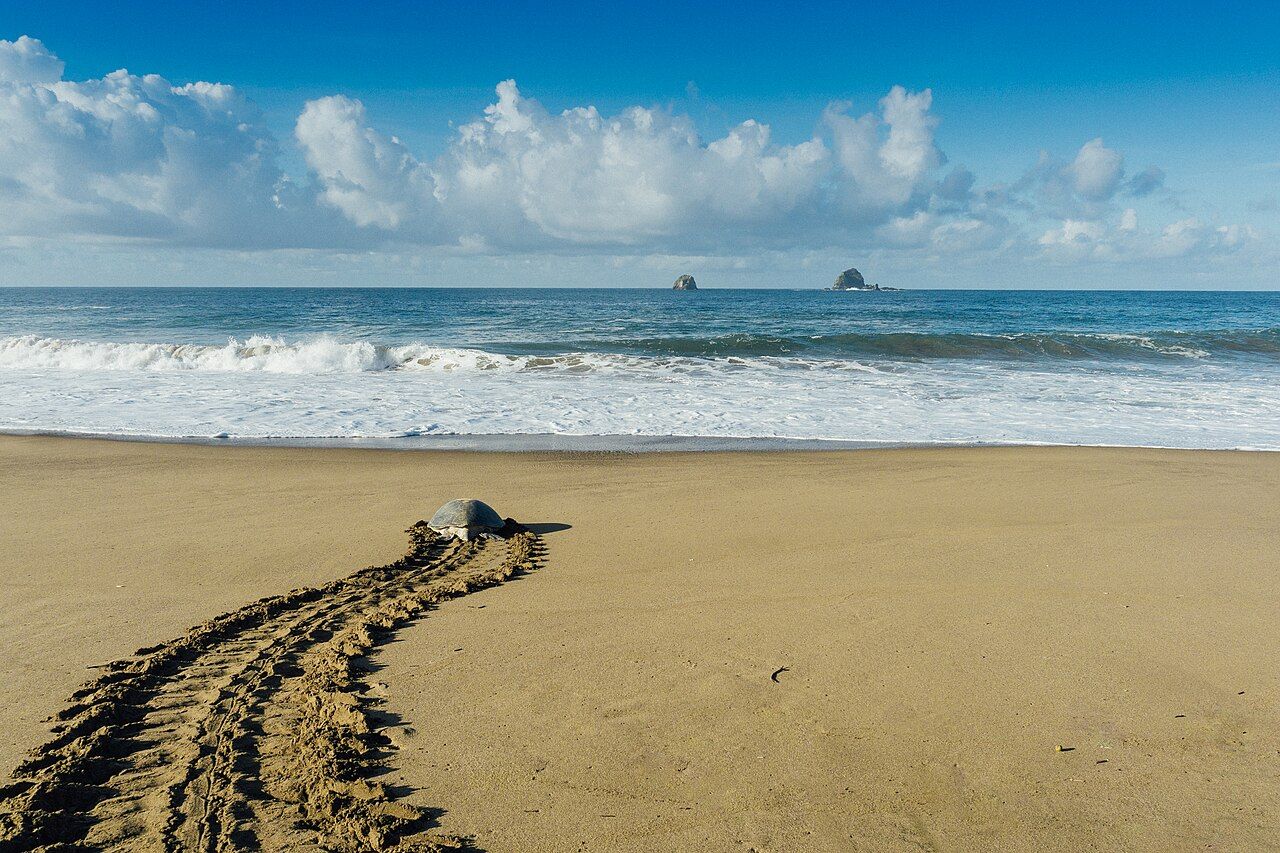
Sukamade is a long, exposed beach facing the Indian Ocean, backed by forest and a river mouth. The green turtle is the species seen most often here, and other species, including the olive ridley, the hawksbill and the leatherback, have been recorded along this coast in smaller numbers. Turtles can come ashore in any month, though the numbers rise and fall through the year, and no night is guaranteed.
Viewing is managed by park rangers who patrol the beach at night. The usual pattern is to wait near the ranger post until a turtle has come up the beach, dug her nest and started laying, and then to walk down in a small group. A laying turtle settles into a steady rhythm and is less easily disturbed; reach her earlier, while she is still crawling or digging, and she may turn back to the sea without laying at all.
How to behave on the beach
- Follow the rangers on when to approach and where to stand.
- No white torches and no flash; use a dim red light only if a ranger allows it.
- Stay behind the turtle, never in front of her head or between her and the water.
- Do not touch turtles, eggs or hatchlings.
- Keep voices low and keep off the upper beach, where nests may lie buried.
Eggs, hatchery and release
Eggs on an open beach face poachers, monitor lizards, wild pigs and high tides, so rangers at Sukamade have for many years moved a share of the clutches to a protected hatchery close to the sand. When the young turtles emerge, they are released toward the sea, and if a release happens while you are there, the rangers may let visitors watch from a distance. Not every stay coincides with one, and it is not something to request as a show.
On the same journeyAlas Purwo and the surf at PlengkungRangers walk the beach again after first light to find the night's nests and read the tracks. A broad trail running up the sand and another coming back down tells them a turtle visited even when nobody saw her, and the shape of the trail hints at the species.
The tiger that left no proof
Meru Betiri is the last place where the Javan tiger was confirmed to survive. Surveys in the 1970s still found signs of a few tigers in the forest that later became the park, and its protection was argued partly on their behalf. No confirmed evidence has turned up here since, and the subspecies is widely treated as extinct. Reports of tracks or glimpses surface in Java from time to time, and some researchers have kept looking, but none has yet settled the question.
The Javan leopard still lives in the island's forests, this one included, though a visitor is very unlikely to see one. What the tiger's story does show is how wide and wild this coast once was, and how much of that wildness now depends on a single block of protected forest.
Bays beyond Sukamade
On the way in, the fishing village of Rajegwesi sits on a broad bay inside the park area, and a walk from that side leads to Teluk Hijau, the Green Bay, a cove of pale sand and clear water when the sea is calm.
Swimming along this coast calls for real caution. The south coast faces open ocean, and the surf and rip currents are strong; Sukamade itself is a nesting beach and not a place to swim. Paddle only where people who live here do, in calm conditions, and never alone.
When to go and what to pack
The dry months, roughly May to October, give the best chance of a passable road and clear nights; the details are in our guide to the dry and wet seasons. In the wet months river crossings can close the route without much warning. Even in the dry season, expect mosquitoes, possibly leeches on forest paths, and humid nights.
Simple overnight lodging near the beach exists on a small scale, but arrange it before you leave, since there is nothing else nearby and phone signal is patchy. Bring cash, food and drinking water for the evening, a rain jacket, long sleeves, repellent and a torch fitted with a red filter. The western part of the park lies in Jember regency, so a visit can also be linked with the town of Jember and its plantations on the way back west.
Above all, give yourself time. A single night at Sukamade may bring no turtles at all; two nights double the chance, and the forest, the river and the quiet beach at dawn make the slow road worth it either way.
Photographers on the rim
- Jean-Marie Hullot, CC BY-SA 3.0
- Tri Pamungkas Aji, CC BY-SA 4.0