
A town between the mountains
Jember lies in the broad lowland south-west of the Ijen plateau, with the Argopuro mountains rising to the north and the slopes of Raung to the east. It is the centre of a large regency, a market and university town with a lively student population, and a stop on the railway across East Java between Surabaya and Banyuwangi.
Most travellers pass through without stopping. That is a pity, because the town has an easy, unhurried feel, good street food and access to a stretch of south coast few visitors see. Once a year, though, it becomes one of the busiest places in the province.
The Jember Fashion Carnaval
The Jember Fashion Carnaval is an annual street parade in which hundreds of performers walk a long route through the centre of town wearing huge, elaborate costumes. Each year the costumes follow a set of themes, and they are built from scratch: towering headdresses, wings, trailing capes and sculpted bodices, many designed and made by the performers and local workshops over the preceding months.
The event grew from a small local initiative in the early 2000s into a fixture of Indonesia's festival calendar, drawing large crowds of domestic visitors and national television coverage. Its troupes have since performed in other cities and abroad, and it has inspired similar carnivals across Indonesia.
Seeing the parade
The carnival is usually held in August, but the exact dates, the schedule of events and the route are announced each year and can shift. There are often several parts spread over a few days, with a children's parade and other events around the main show. Check the dates well ahead, because the town fills up quickly and rooms are scarce.
- Seating in stands along the route is usually ticketed; standing room along the street is free but crowded.
- Arrive early, bring water and shade, and expect long hours in the sun.
- Performers often pause and pose along the route; ask before taking close portraits of anyone in the crowd.
- Keep valuables secure in the crush, and agree a meeting point if you are in a group.
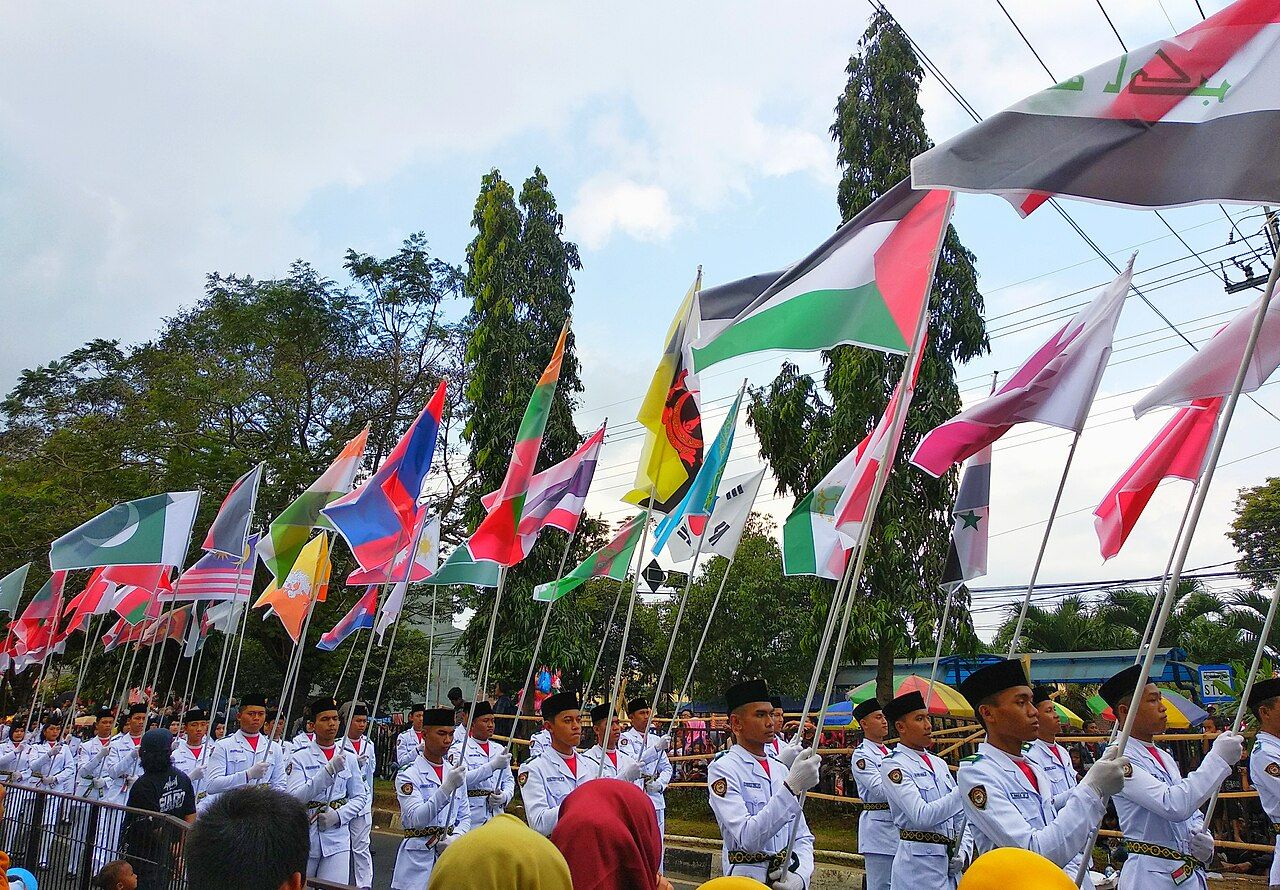
Not everyone in the parade wears a costume. Marching bands, school groups and uniformed flag bearers often take part as well, and the day has the feel of a town festival as much as a fashion show.
The costumes are heavy and the route is long, and the performers walk it in tropical heat. Give them room when they stop, and do not tug at costume pieces for a photograph.
On the same journeyMeru Betiri and the turtles of SukamadeTobacco country
Long before the carnival, Jember was known for tobacco. From the colonial period onward, the region grew leaf for cigars, prized in particular for wrappers, and tobacco remains an important crop. In the dry season you may see tall, dark wooden drying barns standing in the fields, with leaves hung in rows inside to cure slowly.
Curing tobacco is slow, skilled work. The leaves are picked by hand, threaded or tied in bundles, and hung for weeks while their colour and texture change, then sorted by grade. Much of that sorting has long been done by women in large warehouses, and the industry still employs many people across the regency.
Plantations and processing warehouses in the area are working businesses, not attractions, so visits need permission. Driving through the countryside on the way to the plateau gives a good view of the farms, and the roads north and east toward the coffee estates of the Ijen plateau pass through a changing mix of rice, tobacco, rubber and coffee.
Food in Jember
Jember's food follows the broad East Javanese pattern of chilli, peanuts and dark broths, with its own touches. The town is known for sweets made from tape, fermented cassava, including a chewy, sugary sweet sold in small blocks and a soft baked cake; both are common gifts for the trip home. Pecel and rawon are everyday dishes, sometimes served together on one plate.
Evenings bring the town's squares and main streets to life, with food carts selling grilled corn, sate, fried snacks and sweet drinks. The atmosphere is relaxed and family-friendly, and it is an easy place to try several small dishes in one walk.
For a wider look at the region's cooking, see our guide to what East Java eats.
Beaches and forest to the south
South of the town, the regency reaches the Indian Ocean. Tanjung Papuma, a beach framed by rocky islets and a forested headland, is the best known; Watu Ulo, nearby, is named for a long rock formation running into the sea that local stories liken to a serpent. Both are busy with local visitors on weekends and quiet on weekdays.
The south coast surf is powerful, with strong currents, so swim only where it is clearly calm and others are swimming, and keep out of the water when flags or local people warn against it. Further east along the coast, the forest of Meru Betiri National Park begins, part of it within Jember regency.
Getting there and moving on
Trains on the Surabaya to Banyuwangi line stop at Jember, making it easy to break the journey. By road it takes a few hours to reach Banyuwangi, crossing the hills by Kalibaru, and a little less to reach Bondowoso, the western gateway to the Ijen plateau. Allow extra time around carnival days, when the town's streets close for the parade.
Photographers on the rim
- Santinabilah, CC BY-SA 4.0