
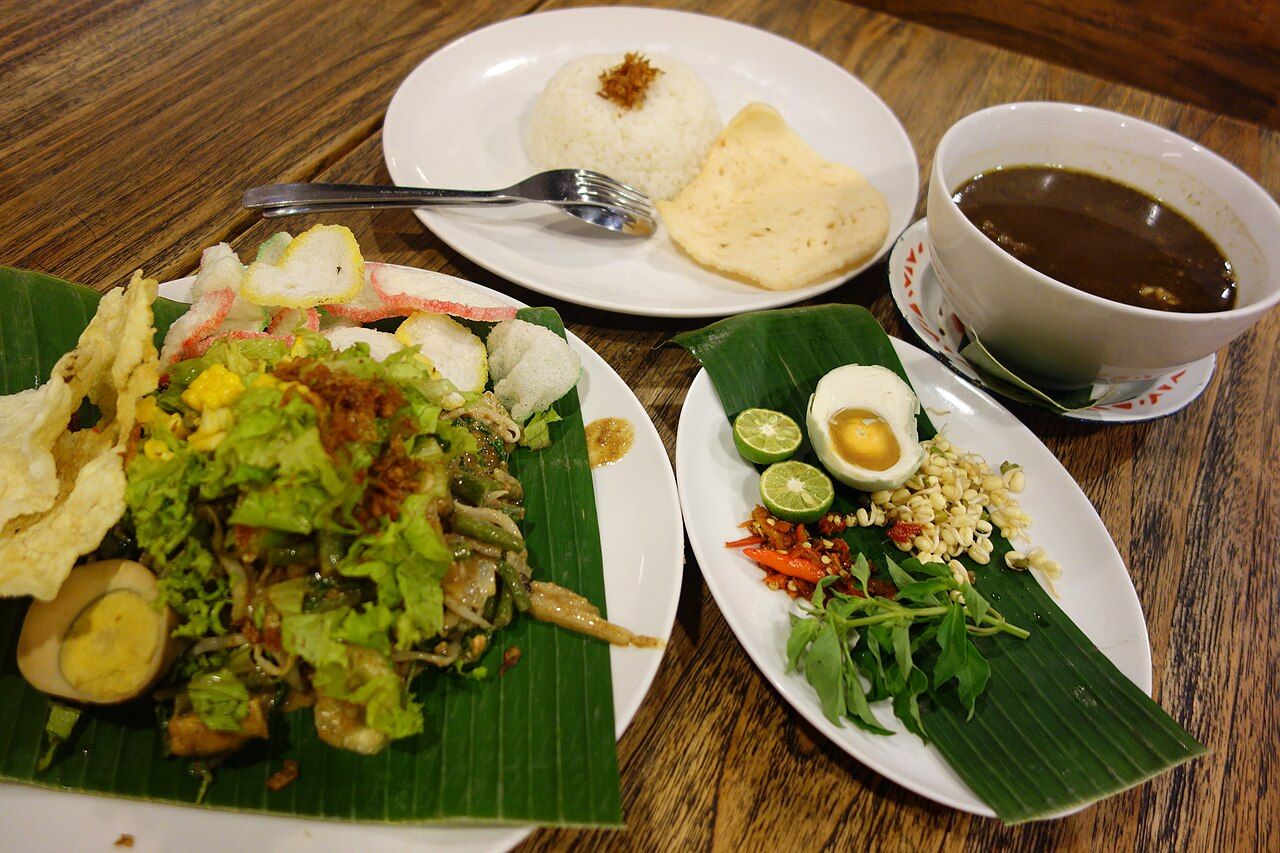
A cooking of chilli, peanuts and dark broths
East Java's food is bolder than the gentle sweetness often associated with central Java. Chilli is used freely, peanut sauces turn up on everything from greens to skewers, and several of the best-known dishes are built on deep, spiced broths. Most of it is eaten at simple roadside warungs, market counters and evening carts, often at shared tables, and much of it is cheap.
Around Banyuwangi the cooking takes on an extra layer from the Osing, the region's own people, whose dishes and names you will meet in the town at the end of Java and the villages around it. Along the north coast, Madurese cooks add their own influence, especially with grilled meat.
Rawon, the black soup
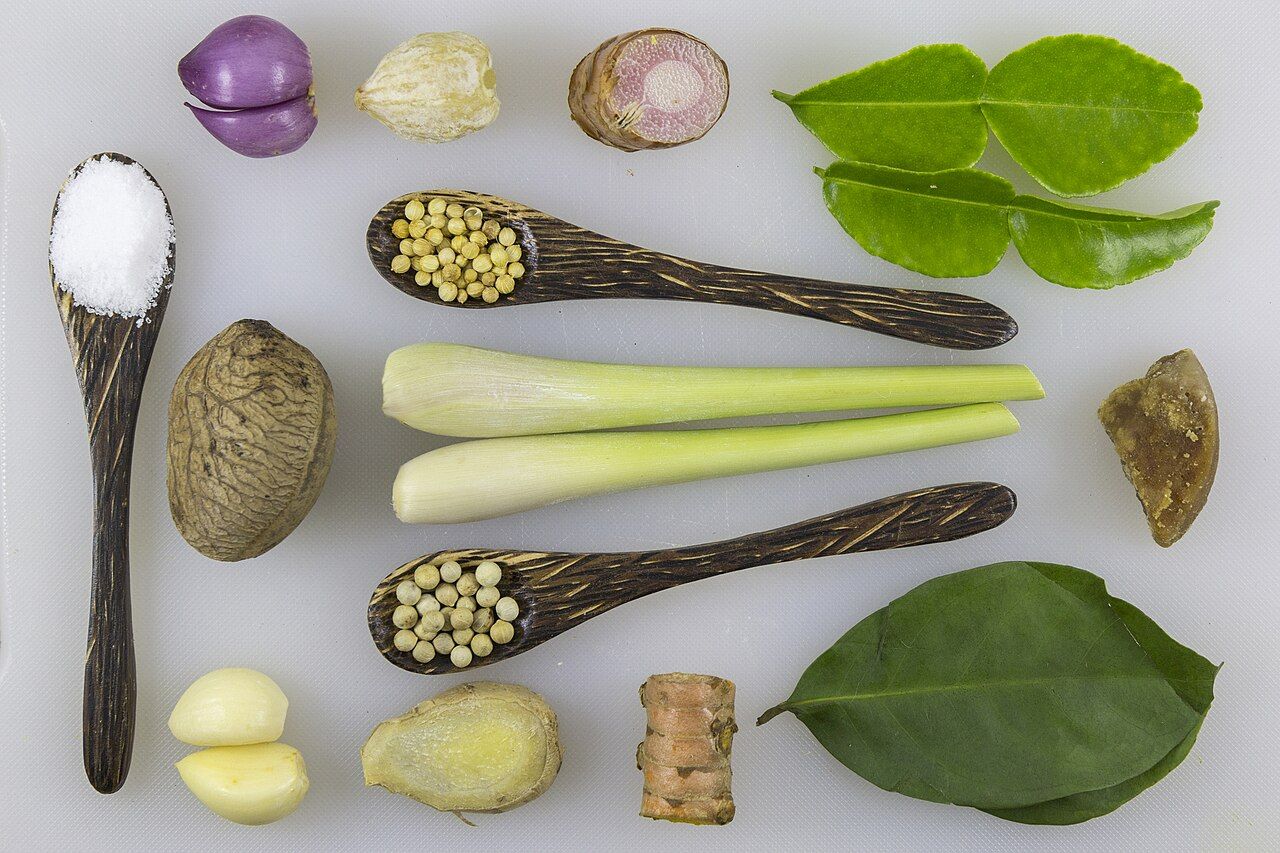
Rawon is a beef soup the colour of dark coffee. The colour comes from keluak, the seed of a tropical tree, which must be carefully processed before it is safe to eat and gives the broth an earthy, slightly bitter depth. Alongside it go shallots, garlic, galangal, turmeric, ginger, lemongrass, lime leaves and other aromatics, pounded into a paste and fried before the stock goes in.
It is usually served with rice, short bean sprouts, a salted egg, prawn crackers and a dish of sambal on the side. Rawon is claimed by Surabaya but cooked all over the province, and every household and kitchen has its own balance of sourness, sweetness and heat.
Pecel and its relatives
Pecel is a plate of boiled and blanched vegetables, such as long beans, spinach, bean sprouts, cassava leaves and the flowers of the turi tree, dressed with a thick peanut sauce spiked with chilli, tamarind and kaffir lime. It is often eaten for breakfast with rice, a crisp peanut cracker called rempeyek, and tempeh or tofu.
East Javanese cooks happily combine dishes, and in some towns you will find pecel and rawon on one plate, with dried beef on the side and the dark broth poured over the rice. It sounds odd and tastes very good.
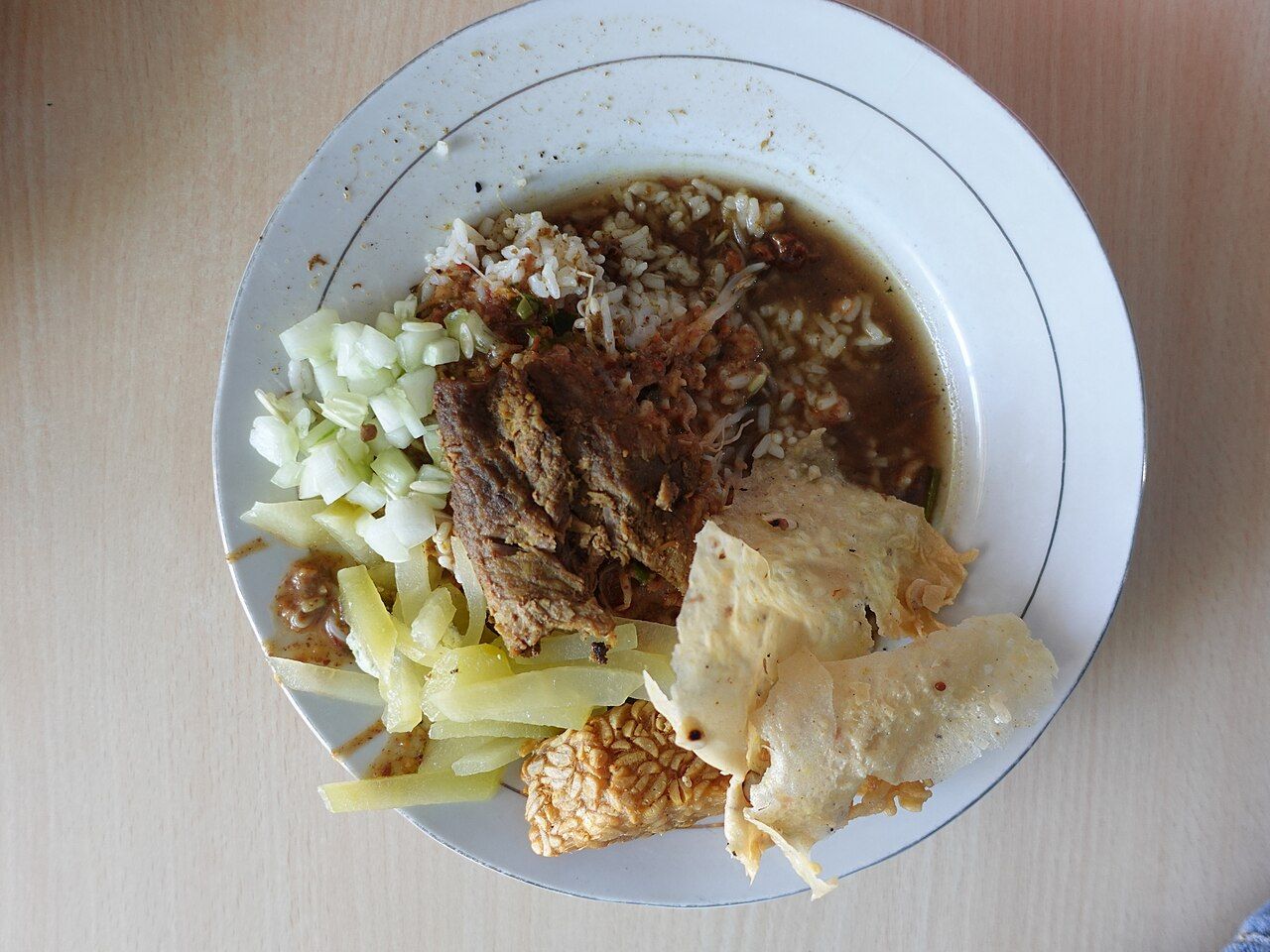
Gado-gado, the better-known cousin from further west, is similar but usually includes boiled egg and potato and a milder sauce. Rujak cingur, a Surabaya speciality, mixes fruit, vegetables and slices of beef snout in a sauce made with petis, a dark shrimp paste.
Banyuwangi's own plates
Nasi tempong is the dish people from Banyuwangi tend to mention first. It is a plate of rice with boiled greens, fried tempeh and tofu, salted fish or fried chicken, and a fresh sambal made to order and fiercely hot. The name is often explained with an Osing word for a slap, which says a lot about the chilli. Ask for less heat if you want to taste anything else.
Rujak soto is another local combination: a rujak of vegetables in peanut and petis sauce, with the beef broth of soto poured over it. Pecel pitik, shredded grilled chicken mixed with spiced grated coconut, is an Osing dish closely linked with village ceremonies and is less often found on a daily menu.
On the same journeyCoffee country on the Ijen plateauSate, soto and food at night
As the light goes, charcoal grills appear at the roadside. Sate in East Java is often cooked in the Madurese style, with chicken or goat on bamboo skewers, a peanut or sweet soy sauce, and compressed rice cakes. Goat sate, grilled a little longer, is a favourite in the towns along the north coast at Situbondo. Soto, a clear or turmeric-yellow broth with chicken or beef, noodles and lime, is the region's everyday comfort food.
Fried snacks fill the gaps between meals: battered tempeh, tofu stuffed with vegetables, banana fritters and crisp chips of cassava. In Jember, look for sweets made from fermented cassava, a speciality of Jember that travellers often carry home.
Coffee the local way
Coffee is grown on the slopes of the Ijen plateau and the hills around it, robusta lower down and arabica higher up. The everyday way to drink it is thick and black: ground coffee and sugar stirred straight into hot water and left for the grounds to settle. Sip carefully, and stop before the sludge at the bottom.
A glass of hot, sweet coffee and a fried snack is the classic way to warm up after a night on the crater at Kawah Ijen. You will find both waiting at Paltuding and in the villages on the way down.
Eating well and eating safely
- Most food is halal, as the region is largely Muslim; pork is uncommon outside some Chinese and Balinese kitchens.
- Eat with the right hand, or with a spoon and fork, which is how most meals are served.
- During Ramadan, many places close in daylight; eat discreetly if you do eat in public.
- Choose busy places where food is cooked to order or kept hot, and drink bottled or boiled water.
- Prices are low and usually fixed; carry small notes, as change can be scarce.
Breakfast is often the best meal of the day for a visitor. Markets open early, and by first light there are counters selling pecel, rice wrapped in banana leaf with a little spiced side dish, sticky rice cakes and sweet fritters. Later in the morning many of the best dishes have already sold out, which is a good reason to eat early after a night on the volcano.
If something on the counter looks unfamiliar, ask what it is and point. Cooks are generally pleased to explain, and the best meal of a trip often turns out to be the one ordered on a guess.
Photographers on the rim
- Lord Mountbatten, CC BY-SA 3.0
- Herusutimbul, CC BY-SA 4.0
- Astari28, CC BY 4.0