
The shortest crossing in the archipelago's spine
Java and Bali are separated by the Bali Strait, which at its narrowest is only a few kilometres wide. Car ferries shuttle across it between Ketapang harbour, just north of the town of Banyuwangi, and Gilimanuk on Bali's western tip. For people living on either side it is an ordinary commute; for travellers it is the natural link between a trip to Ijen and the rest of Bali.
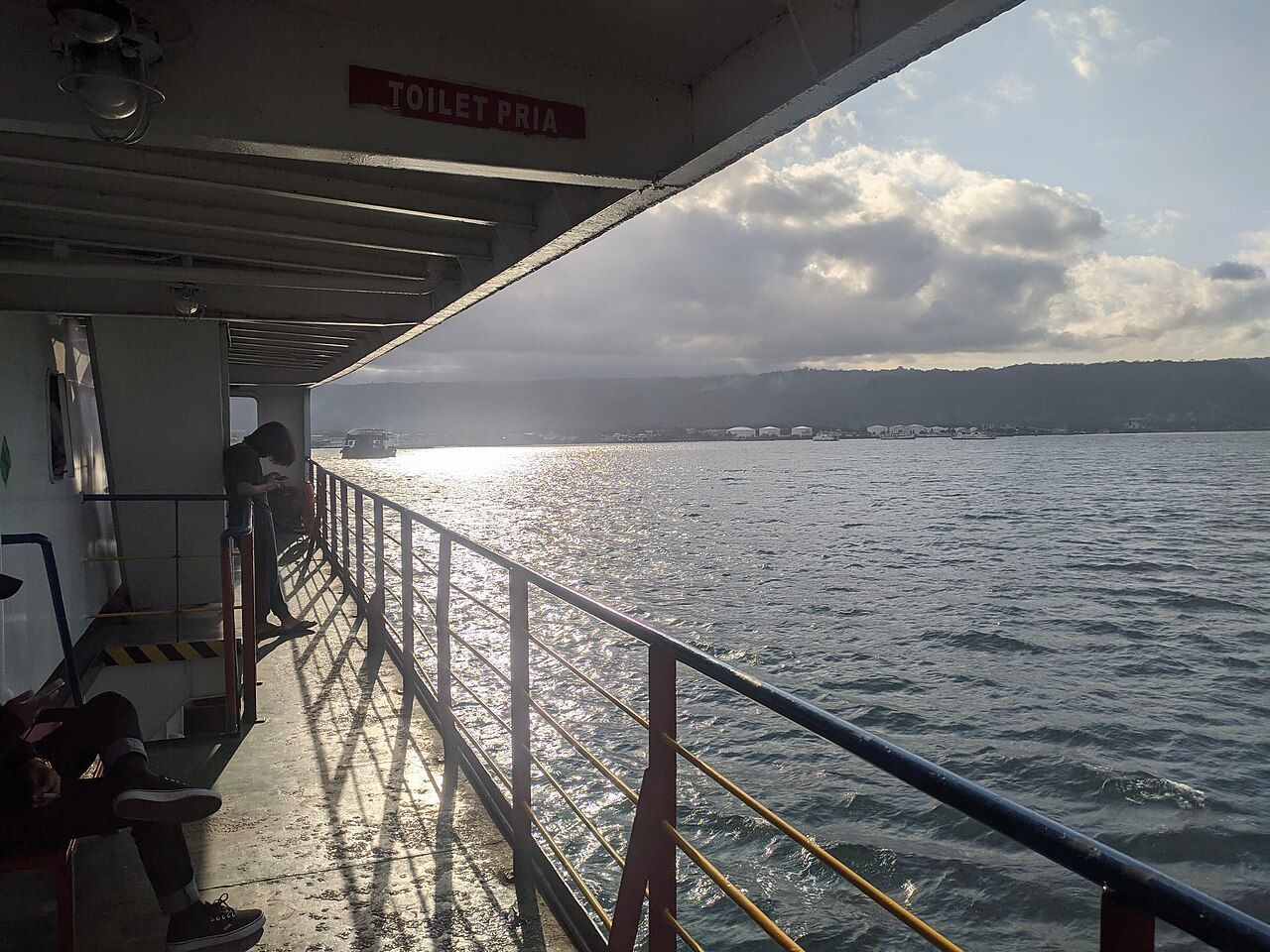
The ferries are working vessels: roll-on, roll-off ships carrying trucks, buses, cars, motorbikes and foot passengers together. Expect basic seating, a deck rail to lean on, vendors selling snacks and drinks, and a lot of engine noise. They are not built for comfort, but the view from the rail makes up for a great deal.
How the crossing works
In normal conditions the service runs around the clock, with ships leaving at short intervals. The time on the water is usually about an hour, but loading, waiting offshore for a berth and unloading can stretch the whole process well beyond that, so allow a generous margin if you have a connection to make on the far side.
Ticketing has changed in recent years, with a shift toward buying in advance through the operator's own digital system rather than paying in cash at the gate. Methods, fares and vehicle categories are adjusted from time to time. Foot passengers, motorbikes and cars are priced differently, and drivers usually buy for the vehicle with its occupants.
If you arrive by train, Ketapang station sits close to the harbour, and the walk between them is short; our guide to trains and roads across East Java covers the rail side.
Documents and checks
Carry identification. Indonesian travellers show their ID card, and foreign visitors should keep their passport, with a valid visa or entry stamp, where it can be reached. Checks at the ports are sometimes routine and sometimes thorough, and the rules on what is checked change with circumstances.
Bali also has its own requirements for visitors from abroad, including a tourism levy introduced in recent years that is paid separately from any ferry fare. Rules and amounts are set by the provincial authorities and may be revised, so look up the current position before you cross.
When not to go
A few days in the year are best avoided or planned around with care.
- Lebaran. In the days around the end of Ramadan, huge numbers of people travel home, and queues at Ketapang can last many hours. The date moves each year.
- Nyepi. On Bali's Day of Silence, the island shuts down for about a day, and ferries to and from Gilimanuk stop. The date follows the Balinese calendar and also moves.
- Long weekends and school holidays. Crossings are busier, especially for vehicles.
- Bad weather. Strong winds and high waves can suspend sailings, particularly in the wet season.
Outside those times, early morning and late evening crossings are often quieter, and the light over the water is softer.
On the same journeyBaluran, Java's little AfricaWhat you see from the rail
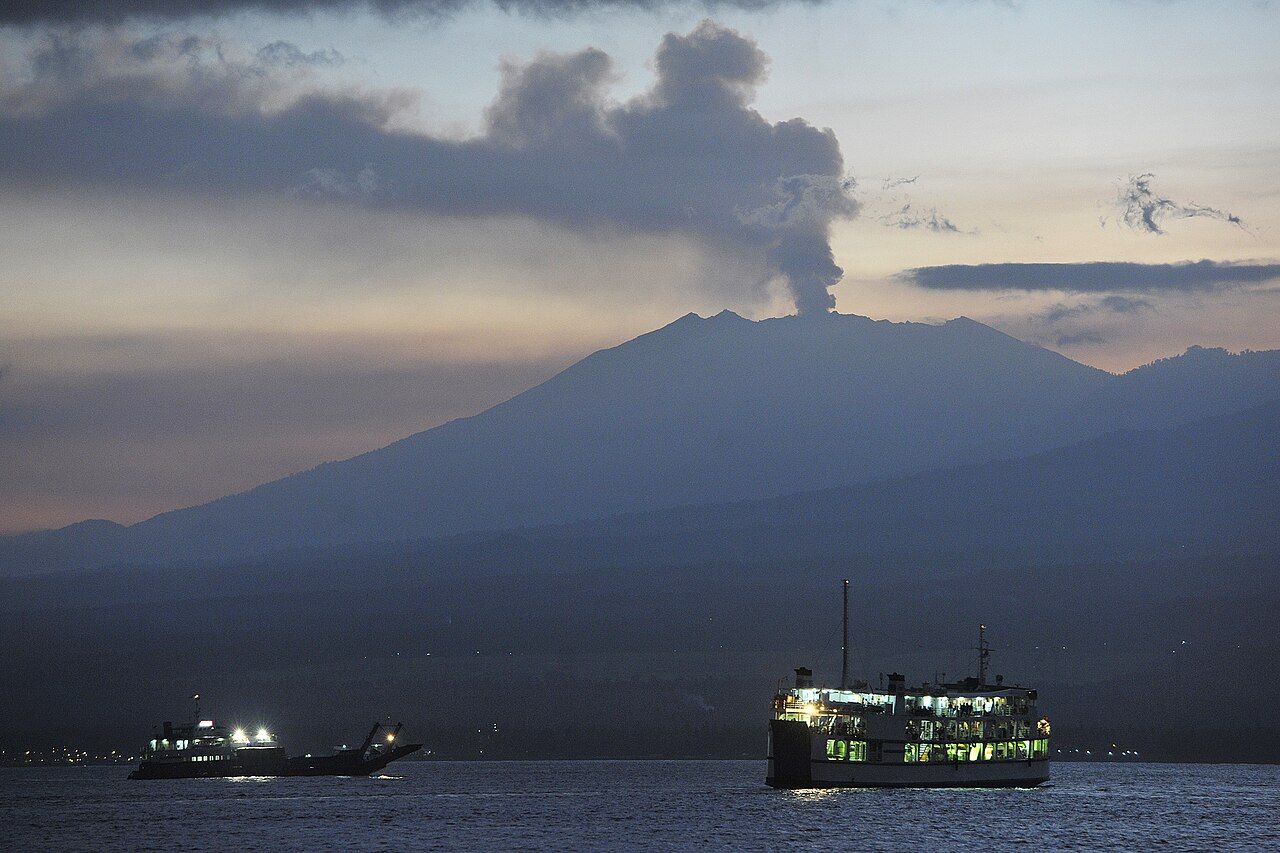
Looking back at Java, the eastern horizon is crowded with volcanoes. The broad, flat-topped bulk of Mount Raung dominates to the southwest, sometimes trailing a plume of ash; the Ijen massif rises nearer, and to the north stands the isolated cone of Mount Baluran above its savanna. On the Bali side, low green hills come down almost to the water, and fishing boats and other ferries pass close by.
The strait has strong currents, and the ships take a curved line rather than a straight one. Stay behind the rails, keep children close, and keep bags with you rather than leaving them in a vehicle on the car deck, which passengers are generally asked to leave during the crossing.
On the Bali side: Gilimanuk and West Bali
Gilimanuk is a working port town rather than a resort. Just beyond it lies West Bali National Park, which covers much of the island's western peninsula: dry monsoon forest, savanna, mangroves around Gilimanuk bay and a coast with coral reefs. It is the home ground of the Bali starling, a white bird with a blue patch around the eye, kept from extinction largely through breeding and release programmes.
Offshore, the small island of Menjangan, within the park, is known for its reef walls and clear water, and is usually reached by boat from the north coast of the peninsula. Park rules, permits and guide requirements apply to trekking and boat trips.
From Gilimanuk, the road to the south of Bali and the airport area takes several hours, and traffic on it can be heavy. If you are heading to Bali after climbing Ijen, consider crossing in the morning after the climb, eating something first, and breaking the long drive rather than pushing straight through.
Crossing the other way
Coming from Bali to start an Ijen trip, cross in the afternoon so you reach Banyuwangi with time to eat and rest before a night start. Arriving after dark is fine, but the harbour area is busy with heavy traffic, so arrange your onward ride in advance. The same cautions apply in reverse: avoid Lebaran and Nyepi, allow time for queues, and check the current ticket system before you travel.
Back to the crater rim for the next walk.
Photographers on the rim
- consigliere ivan from Bontang, Indonesia, CC BY 2.0
- Dare2Leap, CC BY-SA 4.0